
JORGE R. REGALADO · MORTGAGE BROKER · MIAMI, FL
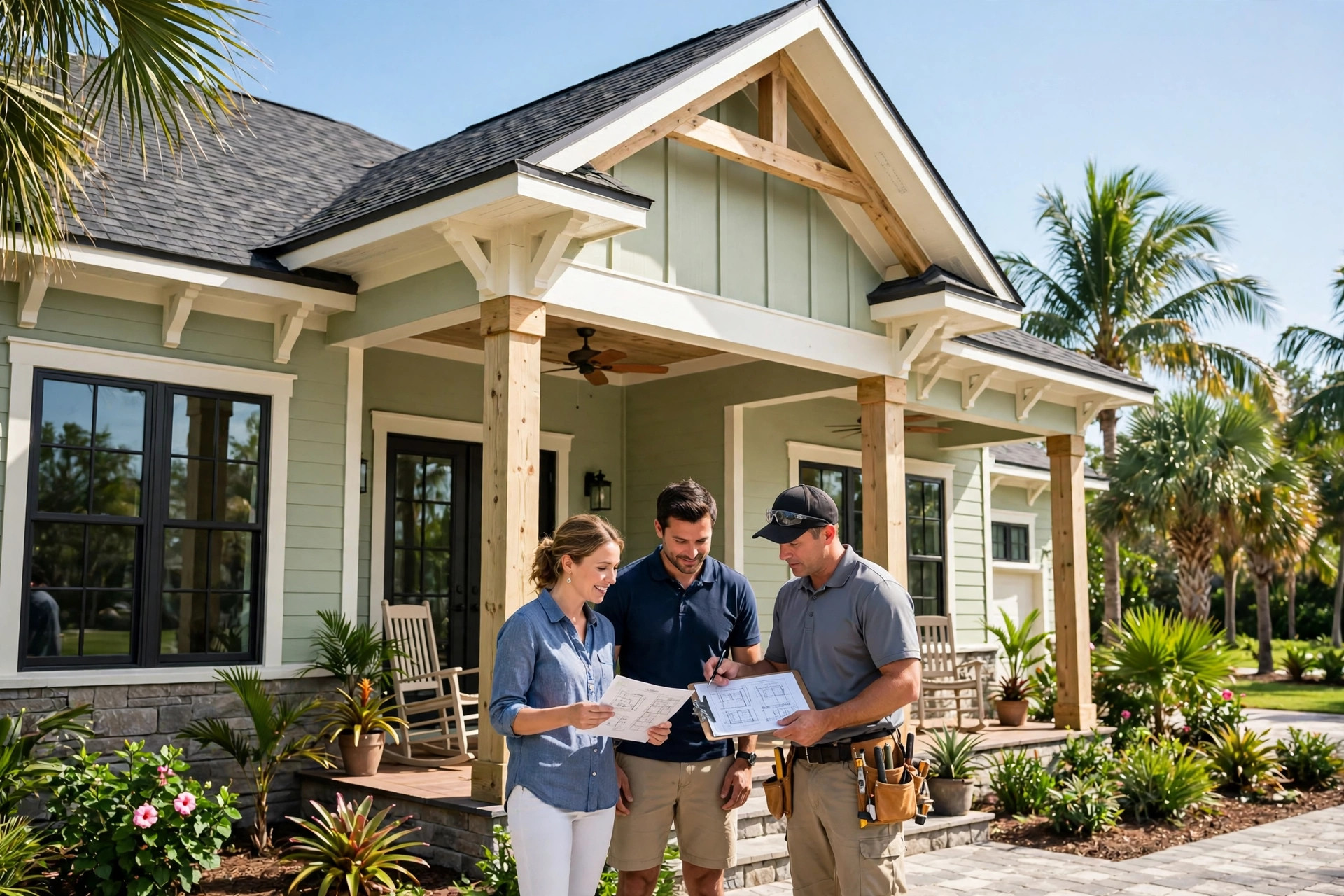
Most homeowners start a project list with what they see every day: the kitchen, the bathroom, the floors. In Florida, that is often the wrong order. From Key West to Gainesville, Lakeland to Pensacola, the work that protects your home from weather, keeps it insurable, and holds up at appraisal deserves to go first — and the pretty work goes better once the bones are sound.
Because two Florida realities sit behind every project: storms and insurance. A beautiful kitchen does not help if a tired roof makes the home hard to insure, or if a buyer discounts it for deferred structural work. Sequencing protects your wallet, too: no point painting walls before a plumbing repair opens them. Think in three phases, and finish one before funding the next.
Start outside and on top. Roof covering and attachments, opening protection such as impact-rated windows, doors, or shutters, roof-to-wall connections, and secondary water resistance are what a Florida wind mitigation inspection documents on the state's uniform form (OIR-B1-1802). Florida law requires insurers to offer premium credits for verified wind-mitigation features; the credit applies to the wind portion of your premium, and the exact amount is set by your carrier — never assume a number before you ask.
No current inspection? Get one before you spend. It shows which features already earn credit and which gap costs you most, so a homeowner in North Central Florida or the Panhandle can rank a roof-to-wall retrofit against shutters with facts, not guesses. Keep the signed report for renewal, refinance, and sale.
Possibly. My Safe Florida Home, run by the Florida Department of Financial Services, offers eligible homeowners a free wind mitigation inspection and grants of up to $10,000 toward approved hurricane-hardening work such as roof improvements and opening protection. For most recipients the state matches $2 for every $1 the homeowner puts in; qualifying low-income homeowners may receive up to $10,000 with no match.
The basics, verified before this post: the home generally must be a site-built, owner-occupied single-family home or townhouse with a Florida homestead exemption, originally permitted before January 1, 2008, insured for $700,000 or less, with income at or below 120% of the county median. Rules and funding change, so confirm your status at mysafeflhome.com — and never start grant-covered work before the program tells you to.
Electrical, plumbing, and cooling rarely photograph well, but they decide whether an inspector, appraiser, or insurer raises a flag. An aging panel, corroded lines, or an air conditioner at the end of its life in Lakeland heat is not cosmetic — it is a near-term bill, fixed proactively or in an emergency. Repair for reliability and safety, keep the documentation, and resist upgrading every system to the top tier.
Now the kitchen refresh, bathroom update, and outdoor space you will actually use — in the Florida Keys, that shaded, screened room may be your best-lived-in square footage. With shell and systems sound, cosmetic work keeps its value better, because a buyer is not subtracting a roof from your price.
One guardrail: do not over-improve past your neighborhood. Appraisals lean on comparable sales, so finishes far beyond surrounding homes in Ocala or Tallahassee rarely come fully back at resale. Spend past the neighborhood only on what you will enjoy for years — and label it: enjoyment, not investment.
Match the money to the phase. Savings suit smaller jobs — do not drain the emergency fund Florida homeownership demands. For larger, long-lived work, some homeowners compare a home-equity loan, a home-equity line, a cash-out refinance, or a renovation loan, weighing the payment against how long they plan to stay; every option is subject to credit review, underwriting, and program eligibility, and none is guaranteed. Pace it so one finished, documented project — not three half-open ones — is where you stand.
Have a project list and no clear starting point? Call Jorge R. Regalado at NEWLOANCO at 305-962-1170, request a closing-cost estimate on the site, or start online: Apply Now. We will talk through roof, systems, and cosmetics in the right order — and what your equity can sensibly do. Home Starts With Ease™.
Jorge R. Regalado, Principal Loan Originator, NMLS #1243458 · NEWLOANCO, NMLS #1369124 · 305-962-1170. Equal Housing Lender. This article is for general education only and is not a loan offer, rate quote, legal advice, or commitment to lend. All loans are subject to credit review, underwriting approval, and program eligibility. Assistance amounts, terms, income limits, and funding availability change and are confirmed at application.
© 2026 NEWLOANCO · 1000 Brickell Avenue, Suite 715-476, Miami, FL 33131 · 305-962-1170 · jr@newloanco.com · Company NMLS #1369124 · Jorge R. Regalado, MLO NMLS #1243458
Facebook Facebook — NEWLOANCO Page Instagram LinkedIn LinkedIn — NEWLOANCO X